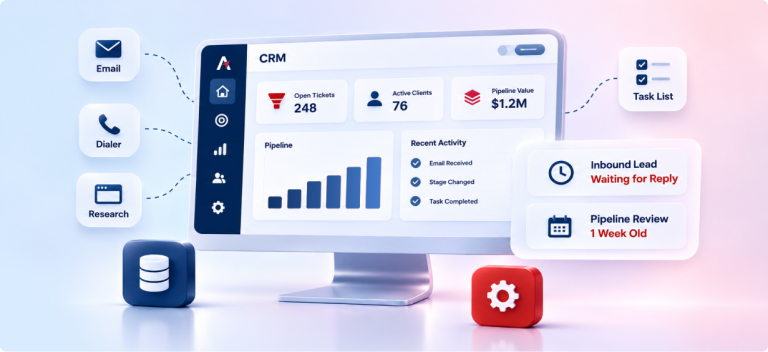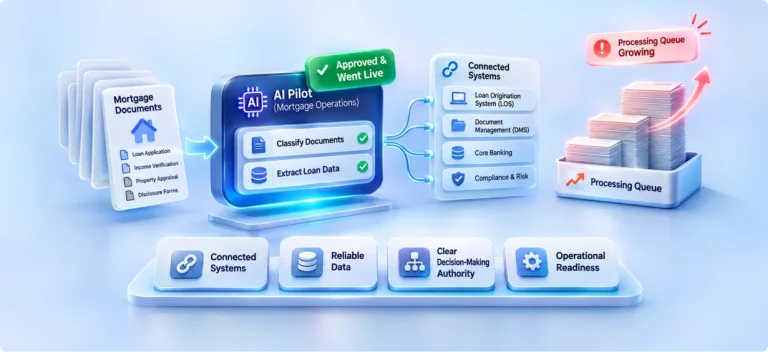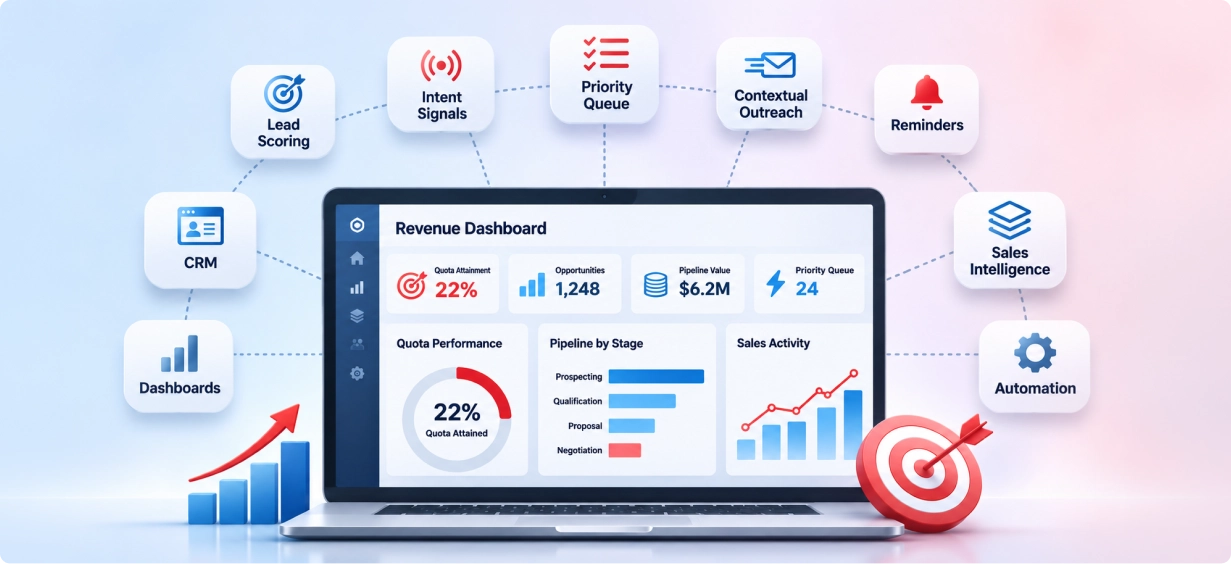

Most revenue teams have accumulated an impressive stack of intelligence. Lead scores, intent signals, next-best-action recommendations, copilots, reminders, dashboards; the CRM knows more about the pipeline than at any point in its history.
However, the sellers still decide what to work on first. They still have to locate context across systems, move between tools, initiate the action, record the outcome, and remember what comes next. This shows that more intelligence hasn’t automatically produced better execution.
The gap isn’t information, it’s fragmented execution. A system of record shows what happened. An intelligent system recommends what’s next. But teams still require an execution engine that coordinates.
The revenue stack has an execution gap
B2B sales teams work on an average of ten separate tools to close deals. That includes dialers, data enrichers, intent platforms, and sales engagement platforms. These tools create operational silos that break workflow momentum.
If you walk through a seller’s day, the operational breakdown becomes quite visible.
-
→
CRM Notification Without Context: A reminder flags an opportunity that has remained dormant for fourteen days. However, it provides no summary of the last technical objection.
-
→
Intent Signals Separated from Action: Intent or scoring tools flag priority accounts, but fail to generate a concrete outreach task.
-
→
Disconnected Communication History: Important client context remains inside personal email inboxes and call recording platforms, separated from the primary pipeline record.
-
→
Fragmented Task Reminders: Reps manage competing to-do lists across calendars, sales engagement platforms, and CRM tasks without centralized prioritization.
-
→
Manual Data Synchronization: Account executives must manually enter call outcomes, meeting notes, and deal stage updates into the CRM to keep records up to date.
Since none of these systems communicate in real time, the rep has to integrate the signals and decide what to execute next every single time.
The gap isn’t information, it’s fragmented execution. A system of record shows what happened. An intelligent system recommends what’s next. But teams still require an execution engine that coordinates.
The sales stack is consuming selling capacity
Fragmentation doesn’t stay a workflow inconvenience. It shows up in the numbers.
Where does the time go
According to Salesforce’s State of Sales research, sales reps spend only 40% of their week on active selling. Gartner puts the admin-work share at 50% of total rep time. The rest goes to CRM data entry, context-switching between tools, and reconstructing information that already existed somewhere in the stack.
Where does the pipeline suffer
The erosion in selling time correlates directly with quota performance. As per Ebsta and Pavilion’s 2025 GTM Benchmarks report, 78% of sellers missed quota in 2025, up from 69% the year before.
The pattern beneath these numbers is consistent:
-
→
Pipeline Competition: High-value opportunities compete with routine tasks for seller attention.
-
→
Context Switching: Reps move between CRM records, email threads, dialers, calendars, and research tools.
-
→
Follow-Up Variability: Critical actions depend on individual seller discipline.
-
→
Administrative Load: Sellers record activity, update stages, create tasks, and maintain CRM data after completing the work.
-
→
Unused Recommendations: Systems can generate more recommendations than sellers have time to review.
-
→
Limited Execution Visibility: Managers can see pipeline stages and activity counts without seeing which critical actions remain stalled.
More sales technology, deployed without coordination, tends to create more decisions for sellers to manage.
The next revenue-tech decision: another copilot, or an execution layer?
AI investments deliver limited value when each system operates on its own, which is exactly the gap agentic AI for sales is meant to close. When several systems influence the same opportunity, their recommendations need to work against shared priorities, seller capacity, and deal context.
It creates two operating models:
The technology identifies an action. The seller assembles the context, chooses the response, completes the task, and updates the relevant systems.

The workflow carries the context forward. Priority determines what enters the seller’s queue. Completed activity updates the revenue environment and informs the next action.

Intelligence-led model
The technology identifies an action. The seller assembles the context, chooses the response, completes the task, and updates the relevant systems.
Execution-led Model
The workflow carries the context forward. Priority determines what enters the seller’s queue. Completed activity updates the revenue environment and informs the next action.
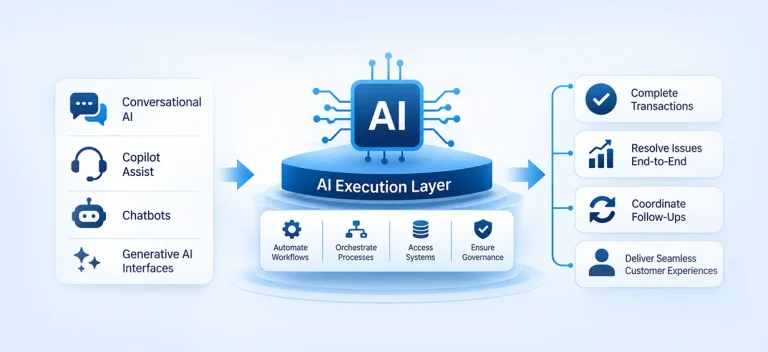
A copilot makes a seller smarter about a single moment. An execution layer coordinates what happens across dozens of moments each day, without asking the seller to serve as the connective tissue.
Revenue teams do not need another place to look. They need sales workflow automation that turns CRM intelligence and the signals surrounding it into governed action, work that gets prioritized, sequenced, and completed, not just surfaced.
Prioritizing the work behind the pipeline
A seller should not have to build the day’s work manually from six systems. An execution queue can bring together the case pointers for a context-aware re:
-
→
New inquiries requiring a response
-
→
High-priority opportunities
-
→
Overdue follow-ups
-
→
Scheduled calls
-
→
At-risk opportunities showing disengagement signals
-
→
Dormant opportunities ready for re-engagement
-
→
Required next steps tied to deal stage
The queue should rank those actions using the information already available across the revenue environment. Relevant inputs can include deal value, opportunity stage, engagement velocity, buyer activity, response history, follow-up timing, account priority, and workflow state.
SalesDen, the Aegntic sales command center, applies this model via an AI-ranked execution queue that covers inquiries, follow-ups, callbacks, and pipeline actions. Its current product architecture also integrates calling, activity capture, follow-up management, communication, and CRM synchronization into a single workspace.
Instead of a list of alerts competing for attention, sellers open a queue that already reflects what matters most right now. The shift is from “here are your alerts” to “here is the work that matters now.”
Prioritization solves only part of the problem. The next challenge is carrying an action through the workflow after the seller starts it. Follow-up is where that gap becomes evident.
Follow-up is an orchestration problem
Follow-up is the clearest place to see the execution gap. That’s because every CRO has watched it break the same way.
A follow-up actually requires:
How fragmented environments break the chain
-
→
Context gap: A reminder appears with no complete context attached.
-
→
Manual lookup: The rep manually searches for the previous communication.
-
→
Drafted off-system: A response gets drafted in a separate tool.
-
→
Sent outside the record: The actual communication happens somewhere else entirely.
-
→
Manual CRM update: The CRM has to be updated by hand, after the fact.
-
→
The cycle repeats: Another reminder gets created for the next touchpoint.
Each step depends on the rep remembering to do the next one. In a coordinated environment, each completed action automatically informs and triggers the next step. If the prospect replies, that event can change the next priority.
The difference is important: A reminder creates awareness. Orchestration creates progression.
The CRM remains the system of record. The command center drives action.
Enterprise CRM investments contain years of account, contact, opportunity, activity, and pipeline data. Replacing that system solely to improve seller execution creates unnecessary risks of migration, integration, and adoption.
That same data sensitivity means any execution layer deserves the same security and compliance scrutiny as workflow fit. Flatworld’s Trust Center outlines the governance safeguards, data-handling practices, and audit controls worth reviewing before extending CRM access to a new system.
The more practical architecture separates the functions.
The command center operates above and across the seller’s workflow: coordinating signals, priorities, communications, and next steps, and automatically synchronizing completed activity back into the CRM.
SalesDen follows this system-of-action model. It works alongside existing CRM and communication systems, coordinating lead responses, follow-ups, calling, activity capture, and CRM updates.
The CRM retains its role as the source of record, and execution moves into a workflow designed around the seller’s actual day.
A connected workflow gives leadership a clear view of real activity. You no longer guess at deal health based on stage names; you see if the right conversations are happening.
What the CRO sees when execution becomes visible
Traditional pipeline visibility answers a narrow set of questions: what’s in the pipeline, what stage each opportunity sits in, and what activity has occurred.
Execution visibility answers a different, yet more operationally useful set:
-
→
Which opportunities require action now?
-
→
Which high-value actions are overdue?
-
→
Where are workflows stalled, and for how long?
-
→
Which opportunities are receiving insufficient engagement?
-
→
Are the prioritized actions actually getting executed?
-
→
What happened after the recommended action was taken?
-
→
Where is seller capacity being consumed, and on what?
Pipeline visibility tells leadership where revenue stands. Execution visibility explains whether the organization is doing what’s required to move it forward.
Is your revenue stack executing or just recommending?
Before adding another sales technology layer, revenue leaders can ask these questions:
Any vendor proposal that can’t answer these directly is proposing another point tool.
If the stack continues to produce intelligence and sellers remain responsible for assembling, sequencing, executing, and documenting the workflow, the organization has automated insight. But, it hasn’t automated execution.
And if the sellers still have to do all the tasks, the execution gap remains. That is the problem SalesDen is designed to address.
SalesDen: The agentic control layer for revenue execution
SalesDen operates as a control and AI sales execution layer across the existing revenue environment, not another CRM competing for the same data.
Its operating model brings the execution pieces into one operating layer:
-
→
What to work on first: AI-prioritized execution queues identify the work that needs attention.
-
→
Actions that stay connected: Workflow orchestration connects actions across the sales process.
-
→
Records that stay current: CRM coordination keeps opportunity records current.
-
→
Follow-ups that don’t slip: Follow-up orchestration keeps commitments tied to workflow events.
-
→
Full context, every action: Context-aware actions give sellers the information needed to act.
-
→
Less admin after calls: Calling and interaction capture reduce post-call administration.
-
→
Sharper, faster outreach: AI-assisted communication supports contextual outreach.
-
→
Visibility for leadership: Execution visibility provides revenue leaders with insight into work progress.
-
→
Growth without added cost: Unlimited users with no per-seat licensing, so adding sellers to the workflow doesn’t add software cost.