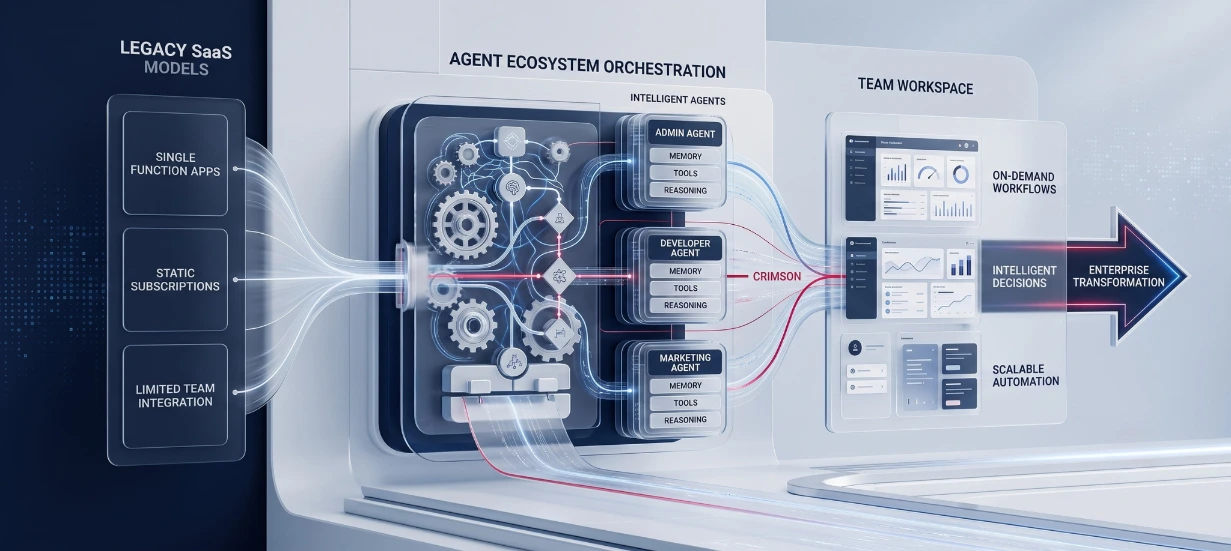

Enterprise software has long followed a predictable path — centralized tools delivered through SaaS, standardized workflows, and repeatable actions. This model served the needs of digitization, but now struggles to keep up with the demands of dynamic and data-driven work.
Custom AI agents build on this foundation. Enhanced with context-awareness, memory, and decision-making capabilities, they integrate into existing systems and carry out tasks independently. The enterprise shift toward this model is no longer theoretical. A 2024 Capgemini report shows that 82% of organizations plan to deploy AI agents by 2026, signaling a broader move toward intelligent, outcome-focused automation.
We’re seeing early versions of this in action: GitHub Copilot writing production-ready code, Salesforce Copilot making decisions inside CRM platforms, Flatworld.ai’s Telenok resolving complex support tickets across internal systems.
This article explores how custom AI agents differ from traditional SaaS, where they can be deployed effectively, and what enterprise leaders must consider in compliance-driven, interconnected environments.
From SaaS to smart assistants: What makes agents different
Traditional SaaS apps are primarily reactive. They require user inputs, follow fixed workflows, and operate without context.
In contrast, AI agents are active participants in workflows. Custom AI agents are persistent software programs that autonomously execute tasks within enterprise systems. They’re not tied to user sessions or click-driven interfaces like SaaS applications and standalone AI APIs. Instead, they are embedded into operational environments such as code repositories, CRMs, file systems, email platforms, and act based on real-time signals, business logic, and historical data.
For example, Cognition’s Devin operates within a developer workspace, writing and debugging code by understanding the whole project context.
In enterprise customer support, Flatworld’s Telenok pulls data from internal systems, detects customer intent, resolves common issues, and flags complex cases for escalation. It works continuously, learning from ticket history and team feedback to improve resolution accuracy.
Another enterprise example is Salesforce Einstein Copilot, which helps sales teams by automatically prioritizing leads, drafting replies, and prompting next-best actions based on CRM trends and sales data.
Real use cases of custom AI agents
Custom AI agents are already being deployed across core enterprise functions to reduce manual work, improve accuracy, and accelerate decision-making. Below are key use cases that highlight their versatility and operational value.
Insurance claims processing
AI agents can extract data from claims forms, validate information against policy documents, and flag anomalies or missing inputs—reducing processing time and manual verification effort.
Mortgage compliance audit automation
Agents can review loan files for regulatory completeness (e.g., RESPA, TRID disclosures), flag non-compliant entries, and generate audit-ready checklists—reducing risk exposure during regulatory reviews.
AI-powered content moderation
Custom AI agents can scan and classify user-generated content across languages, identify policy violations, and auto-flag or escalate based on severity and platform guidelines.
Intelligent HR screening
AI agents can scan and score resumes, match them with job descriptions, and flag top candidates for recruiter review—accelerating time-to-hire and reducing human bias.
Survey data cleaning and analysis
Agents clean raw survey responses (e.g., remove duplicates, normalize open-text fields), categorize feedback using NLP, and generate executive-ready summaries and dashboards.
Procurement data reconciliation
AI agents reconcile supplier quotes, contracts, and delivery records, flag pricing mismatches or policy violations, and help streamline vendor management workflows.
Lead enrichment and routing
AI agents extract lead data from inbound inquiries or CRM systems, enrich it using third-party APIs (LinkedIn, Clearbit, etc.), and assign it to the right sales rep based on predefined rules.
Code review & DevOps
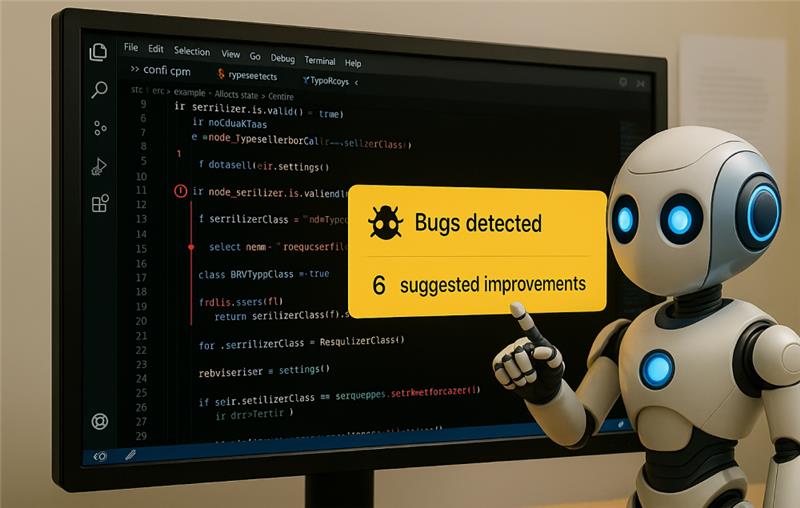
Agents can automatically scan pull requests, flag bugs, and suggest improvements based on code style and logic consistency.
Product QA
AI agents can run automated tests across different environments, simulate user interactions, and capture errors in real time. They generate structured bug reports using visual evidence, logs, and metadata.
Project management
Agents track timelines, sync updates from tools like JIRA, and compile summaries from daily standups or project meetings.
Customer support
Support agents can triage incoming tickets, draft initial responses, and route queries based on urgency or sentiment.
Why AI agents outperform traditional SaaS
SaaS tools brought scale and accessibility, but they were built for stable processes and predictable inputs. In high-velocity, multi-system environments, they fall short because they were never designed to adapt in real time or close execution gaps across systems.
Custom AI agents offer a more resilient alternative. They function not just as software, but as embedded operational capacity — capable of working across tools, adjusting to edge cases, and learning from each outcome. This makes them better suited for teams facing volume, variability, and complexity.
-
→
Context-driven decision-making: Agents use memory and real-time data to act based on what’s already happened, whether it’s a past conversation, a failed test case, or a sales history, to reduce errors.
-
→
Goal-first execution: Rather than requiring users to piece together a process, agents are configured around a specific outcome, like resolving a support ticket or completing a deployment.
-
→
Adaptive behavior: SaaS logic is static unless manually updated. Agents improve continuously by learning from success/failure patterns and adjusting behavior with each new input, without waiting for a product update or reconfiguration cycle.
-
→
Lower coordination overhead: Agents reduce the need for users to switch between apps, copy information across tools, or trigger workflows manually. They operate across silos, closing execution gaps that often slow down teams using disconnected SaaS stacks.
-
→
More responsive to change: When business rules, customer expectations, or compliance needs shift, retraining or reconfiguring an agent is often faster than retooling multiple SaaS workflows.
Deployment considerations for custom AI agents
Designing a capable AI agent is only part of the equation. In enterprise environments, especially in regulated sectors, what determines long-term value is how reliably, securely, and transparently that agent operates within live systems.
1. Security and role-based access
Agents often interact with sensitive systems such as internal documentation, customer records, and financial data. This requires strict permissions and clearly defined scopes to prevent unauthorized actions or data exposure.
2. Version control and update management
Unlike static applications, agents evolve. Teams need rollback-ready versioning, changelog tracking, and test environments to validate updates before they’re deployed into production workflows.
3. Performance monitoring
Agents should be treated as operational systems with defined success metrics, not experimental tools. Monitoring should cover execution accuracy, task completion rates, and behavioral drift over time.
4. Data feedback and memory refresh
Continuous learning pipelines based on structured feedback, user corrections, or supervised signals help keep agents relevant and aligned with changing internal processes.
At Flatworld.ai, we work beyond the prototype phase — our focus is on real-world deployment at scale. What sets Flatworld.ai apart is our understanding of enterprise constraints. We design agents that work within your actual systems while ensuring they meet your security, compliance, and governance requirements.
Why now is the time to experiment

Early adoption of custom AI agents provides a competitive edge, enabling organizations to automate operations and adapt to changing market demands.
-
→
Operational efficiency: Automate routine tasks, freeing up human resources for strategic initiatives.
-
→
Cost savings: Reduce operational costs through automation and improved accuracy.
-
→
Competitive advantage: Stay ahead of competitors by using cutting-edge technology.
Flatworld.ai supports this early-stage experimentation with purpose-built frameworks for agent testing, security, and rollout planning. We help you identify viable agent use cases, set measurable success criteria, and deploy safely, so your teams gain hands-on learning without operational risk.
From static software to autonomous teams
Custom AI agents offer a foundational upgrade to the SaaS model. Instead of navigating through screens or stitching together APIs, teams can now delegate well-defined tasks to systems that execute, adapt, and improve over time.
Teams that treat agents as extensions of their workforce are already seeing faster execution, fewer handoffs, and better use of human capacity. As workflows grow more complex, the organizations that invest in intelligent agents today will build an advantage not just in productivity, but in flexibility and resilience.
The Flatworld.ai team is ready to move beyond experimentation. From defining your first use case to scaling agent adoption across functions, our team provides the infrastructure, safeguards, and system expertise to deploy responsibly and deliver lasting results.